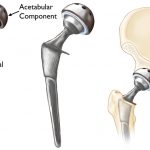
Hip revision surgery involves replacing a damaged or failed hip joint with a prosthetic implant. It is also called resurfacing. It is commonly used to treat arthritis, damage caused by trauma or injury, or other conditions that make it difficult for the joint to function correctly. Chevy Chase hip revision surgery can be performed through an open incision or arthroscope.
Open hip surgery uses large incisions to access the joint, while arthroscopic procedures use small incisions and multiple tools inserted through tubes. Both techniques use state-of-the-art equipment to facilitate precision work within the joint cavity.
The goals of hip revision surgery include the following;
- To relieve pain in the hip
- To restore full range of motion in the hip
- To correct a deformity caused by arthritis and other types of joint damage
- To improve leg length discrepancy
- To relieve pressure on nerves in and around the hip
How hip revision surgery is done
The surgery can be done in two ways. The surgeon replaces the ball or femoral head with one made of metal and plastic and the socket/acetabulum with one made of metal, plastic, or ceramic.
The surgeon removes some bone from the socket and replaces it with a prosthesis. This procedure is called resection arthroplasty. The metal socket and ball of the artificial joint can wear out over time.
This can happen more quickly than anticipated and requires revision surgery in some cases. The metal stem, which is the piece that connects the hip to the femur, may loosen or break, causing pain and instability in your hip. The plastic cup or the component that holds your femur bone to the socket can crack or wear out over time, leading to pain and the risk of early failure at a young age.
The metal shell, which is the component that holds everything else together, may also wear out or break down over time, resulting in severe pain and discomfort that is often debilitating enough for patients to need revision surgery before they even reach middle age. Furthermore, if all goes well with this first replacement surgery, but you are still having issues due to damage caused by osteoarthritis (OA), you may need another procedure called resurfacing. That is because the bones around the old implant are too thinned down from OA pathology. Resurfacing involves removing those areas where the bone has been lost entirely from degeneration via the mechanical scraping away technique rather than using cutting tools like saws or drills, which could cause further damage than necessary if used incorrectly.
What to expect during hip revision surgery
Hip revision surgery is more complicated than hip replacement surgery and needs to be carried out by a specialist surgeon in a specialist center.
You will usually be referred by your GP or orthopedic surgeon to the dedicated adult revision unit, where you may have an assessment with an experienced surgeon. You can then be seen by a team of nurses and physiotherapists who specialize in hip revisions and other staff members involved in your care before making arrangements for your surgery.
For some people, it is possible to have their operation at the same hospital as their original operation took place. However, this depends on factors such as the type of implant used during their first operation, such as metal-on-metal implants, and where exactly the prosthesis was made up through either an iliofemoral or femoral approach.


